
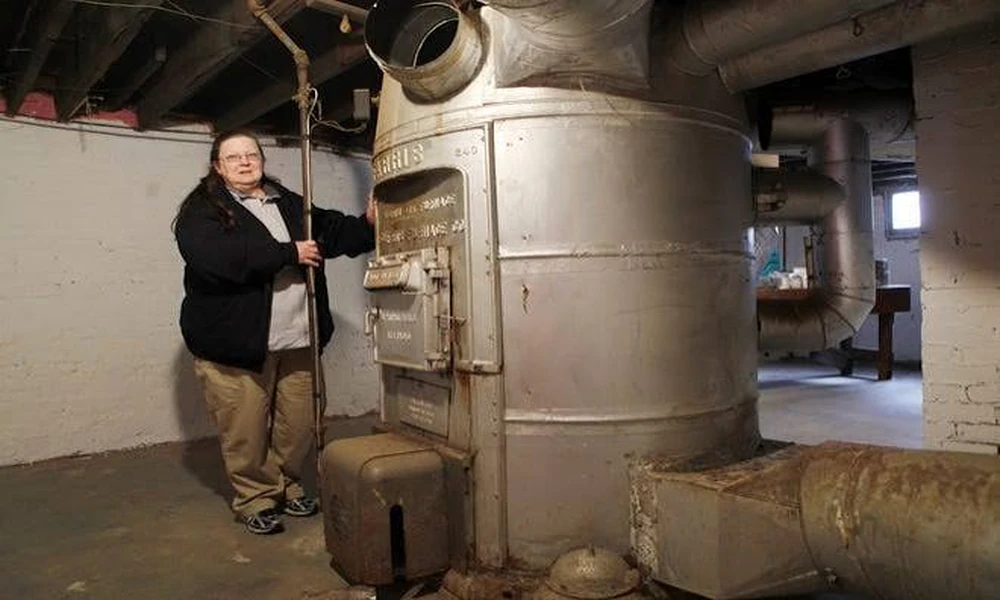

There’s a small metal label stuck inside every furnace cabinet, usually on the back of the lower access panel. Most people never look at it. It lists the model, the serial number, the input rating in BTUs and, hidden inside that serial number, the month and year the unit was built. That one date tells you more about what your furnace needs this winter than almost anything else.
It matters a lot in Springboro. The city grew fast through the 1990s and 2000s, and whole subdivisions went up within a few years of each other. That means thousands of homes got their furnaces at roughly the same time, and many of those original units are now reaching the age where small problems start stacking up. If you’re comparing furnace services in Springboro, it helps to have a team that puts the price in writing before any work starts, tries repairs before pushing replacements, and answers calls around the clock with same-day visits. The Dayton-based crew behind that link offers all of that, along with a maintenance plan that includes two tune-ups a year and waives diagnostic fees. Still, the right kind of service depends on how old your furnace actually is, so start there.
Decoding the Label Before Anything Else
Manufacturers hide the build date in different ways. Some start the serial number with the year and week, while others use a letter code for the month. If you snap a photo of the label and search the brand along with “serial number date,” you’ll usually figure it out in under a minute. While you’re there, check the efficiency rating. Older furnaces with a metal flue pipe going into a chimney are typically around 80 percent efficient. Furnaces with two white PVC pipes running out the side of the house are condensing models, usually 90 percent or higher.
The First Ten Years Are Mostly Paperwork and Filters
A newer furnace rarely fails in a major way, but it can lose warranty coverage without anyone noticing. Many manufacturers only give their best parts coverage if the unit is registered within a short time after installation, and some require proof of yearly maintenance. It’s worth finding out whether whoever installed the furnace, or the previous owners, ever registered it.
Beyond that, this stage is about basic upkeep.
- Change the filter every one to three months, and more often if you have pets or ongoing renovation dust.
- On condensing furnaces, keep the condensate drain and trap clean, since a clogged line is one of the most common reasons a newer unit shuts down.
- Keep both PVC vent pipes outside free of snow, leaves and wasp nests, especially after a heavy snowfall.
Between Ten and Twenty, Small Parts Start Speaking Up
This is where many Springboro homes are right now, and it’s also when service calls start picking up. The problems are usually small, inexpensive parts that wear out after thousands of heating cycles. A dirty flame sensor can make the burners light and shut off within seconds. Hot surface igniters crack. Inducer motors start to hum or rattle before they give out. A weak blower capacitor can leave the fan struggling to start. Pressure switches trip when the venting is partially blocked.
None of these automatically mean the furnace is done. A reasonable way to judge a repair is to multiply the furnace’s age by the repair cost. If the result is well under about $5,000, repairing usually makes sense. If it gets close to or above that, it’s time to start pricing a replacement.
After Twenty, Safety Gets Its Own Line on the Checklist
The heat exchanger separates combustion gases from the air you breathe, and after decades of heating and cooling cycles, the metal can develop cracks. A technician should inspect it closely at every visit once a furnace reaches this age. Some warning signs you can spot yourself include soot around the burner area, a flame that flickers or lifts when the blower turns on, or rust flakes collecting under the burners. Make sure every level of the house has a working carbon monoxide alarm, including near bedrooms, regardless of the furnace’s age.
Efficiency is another factor at this stage. An 80 percent furnace loses about a fifth of the fuel you pay for straight up the chimney. Federal efficiency standards are set to push most new gas furnaces toward about 95 percent later this decade, so replacing an aging unit now means choosing from equipment that is already moving in that direction.
What Replacement Looks Like in a Subdivision Home
Replacing a Springboro furnace often brings up a few issues homeowners don’t expect.
- Sizing. Builders in the 1990s often installed furnaces larger than necessary. Since then, many homes have gotten new windows and extra attic insulation. A proper load calculation often shows a smaller furnace will do the job, and a better-sized unit runs longer, steadier cycles.
- Venting changes. Moving from an 80 percent furnace to a condensing model means installing new PVC venting and a condensate drain. If the water heater shared the old chimney, it may be left venting alone into a flue that’s now too large for it. That can cause condensation and drafting problems unless the chimney is relined or the vent setup is changed.
- Two-story comfort. Colonial-style homes with bonus rooms over the garage are common here. A two-stage or modulating furnace paired with a variable-speed blower can even out the temperature difference between the main floor and those rooms better than a single-stage unit.
What a Real Tune-Up Should Cover
A $59 “clean and check” can mean almost nothing, so ask what’s included. A thorough fall visit should cover the following.
- Measuring gas pressure and temperature rise, then comparing both to the specs on the furnace label.
- Cleaning the flame sensor and checking the igniter for cracks.
- Inspecting the heat exchanger and checking the vent pipe for proper draft.
- Testing the safety switches, not just making sure the furnace turns on.
- Checking blower motor amperage and the capacitor.
- Flushing the condensate drain on high-efficiency units.
You don’t need to become an HVAC expert. You just need to know which chapter your furnace is in. Take a photo of that label this weekend, figure out the build year, and you’ll know whether this winter calls for basic maintenance, a few worn parts, or starting to plan for a replacement.
The Build Year Hiding Inside Your Springboro Furnace
