
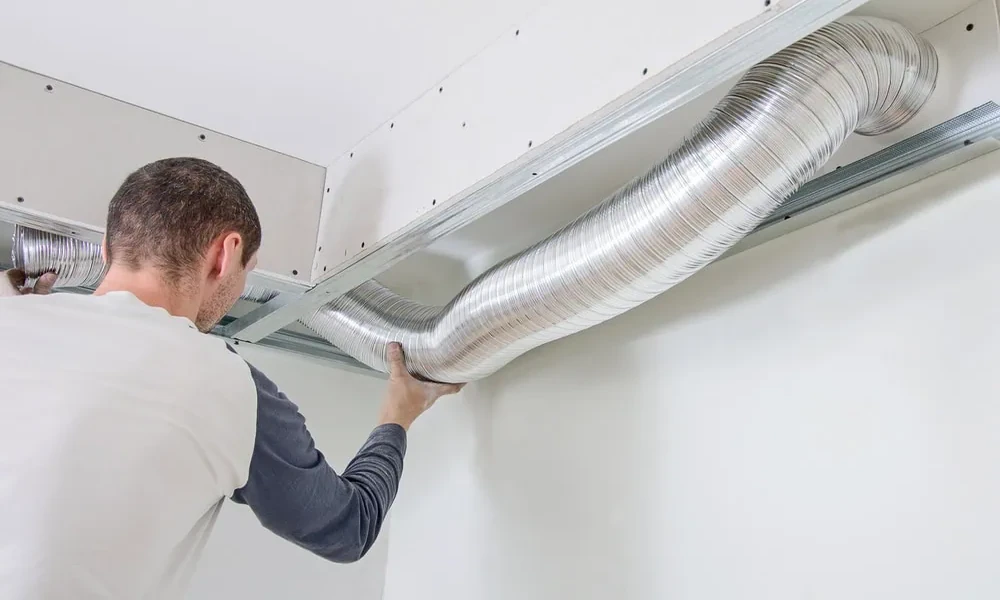

Placing a laundry room upstairs can make household routines easier. Clothes no longer need to travel between bedrooms and a basement, and the machines can be kept close to the spaces where laundry is created. However, an upper-floor laundry room can also require a longer and more complicated exhaust route.
Good dryer vent design matters because a vented dryer must move warm, moist air all the way from the appliance to the outside. In a multi-story home, that path may rise through walls, cross an attic, turn around framing, or end at a roof or high exterior wall. Each part of the route affects airflow, cleaning access, and long-term performance.
How a Vented Dryer Moves Air
A conventional vented dryer heats air and moves it through tumbling clothes. The warm air picks up moisture and carries it into the exhaust duct. From there, the duct should release the air outside the home.
The system works best when air can move through a clear, properly sized route without unnecessary resistance. If lint narrows the duct or the vent has a crushed connection, excessive bends, or another obstruction, moisture may remain in the clothes and heat may build up around the appliance.
The U.S. Consumer Product Safety Commission explains that lint can block airflow and create excessive heat inside a dryer or exhaust duct. It recommends periodic vent cleaning and checking the outside vent while the appliance runs to confirm that exhaust air is escaping.
Why Multi-Story Dryer Vents Can Be More Complicated
A dryer located beside an exterior wall may need only a short route to the outside. An upstairs or interior laundry room may not have that option, so the vent can require more ductwork and a less direct path.
Multi-story layouts may involve:
- A long vertical rise through one or more floors
- Several turns around framing or utilities
- Ductwork hidden behind finished walls and ceilings
- Sections passing through an attic or other unconditioned space
- A termination on the roof or a high exterior wall
- Limited access to hidden joints and problem areas
- Additional equipment and safety precautions for exterior maintenance
None of these features automatically means the system is defective. They simply make thoughtful design, correct installation, and regular inspection more important.
Long Vent Routes Can Reduce Airflow
The dryer’s blower must push exhaust through the complete vent. As the route becomes longer, the air encounters more resistance. Elbows and sharp direction changes can add even more resistance and create places where lint collects.
This does not mean every long vent must be replaced. The acceptable route depends on the dryer model, duct size, fittings, manufacturer instructions, and locally adopted building requirements. A qualified professional should evaluate the actual installation rather than relying on one universal maximum length.
Performance provides useful clues. If a normal load suddenly takes much longer to dry, the exterior airflow feels weak, or the dryer becomes unusually hot, the vent may need cleaning or further inspection.
Vertical Runs Need Careful Planning
In an upper-floor laundry room, the vent may travel upward before reaching the roof. The dryer must move lint and moisture through that vertical section, so weak airflow or buildup can affect performance throughout the line.
Vertical routes can also be harder to examine from either end. A technician may need specialized tools to reach the complete duct and verify that loosened lint has been removed rather than left at another point in the system.
The exterior termination should be considered during the original design. A rooftop exit may be practical for the building layout, but it also creates a maintenance point that cannot be reached safely from the ground.
Every Bend Creates Another Collection Point
Turns are sometimes unavoidable because the vent must pass walls, joists, plumbing, electrical lines, and other parts of the home. However, a route with several tight bends gives lint more surfaces and changes in direction where it can settle.
The transition duct behind the dryer is especially vulnerable. If the appliance is pushed too close to the wall, the connection can flatten or fold. A crushed hose restricts airflow before the exhaust even enters the permanent ductwork.
The CPSC recommends rigid or corrugated semi-rigid metal ducting instead of plastic or foil accordion-style products. Metal supports better airflow and is less likely to kink, crush, or trap lint.
Hidden Ductwork Can Hide Problems
Much of a multi-story dryer vent may be concealed inside the building. A disconnected joint, damaged section, or poor support may not be visible from the laundry room. Warm air, lint, and moisture can then escape into a wall, ceiling, attic, or other hidden space.
Possible signs include lint appearing where it should not, a musty smell, unexplained warmth, staining near the route, or weak airflow outside. These symptoms can have several causes, so opening a wall should not be the first response. A professional dryer vent inspection can help narrow down the location and type of problem.
Homeowners should also pay attention after remodeling work. A vent can be damaged, pinched, or accidentally disconnected when walls, floors, cabinets, or nearby utilities are changed.
The Exterior Exit Must Allow Air to Escape
Whether the vent ends on the roof or a wall, the termination should open when the dryer runs and close when it stops. A stuck flap, lint buildup, damaged cover, leaves, or nesting material can restrict the final part of the route.
Do not install a screen that can trap lint over the exhaust. A proper damper can help keep outdoor debris and animals out while still allowing lint and air to leave the duct.
High exits should be inspected from a safe location. Homeowners should not climb onto a roof or use a tall ladder without suitable equipment and experience. Professional service may be the safer option when the termination is difficult to reach.
Dryer Vent Design Affects Energy Use and Drying Time
Airflow is essential for removing moisture. When exhaust moves slowly, clothes can remain damp even though the dryer produces plenty of heat. The machine may run longer, or the homeowner may start a second cycle.
ENERGY STAR recommends cleaning the lint filter after every load to improve air circulation and dryer efficiency. However, the filter cannot remove material that has already entered the transition hose or permanent exhaust duct.
A well-designed and properly maintained route helps the dryer use its available airflow effectively. It cannot correct an internal appliance problem, but it can prevent the vent itself from becoming the reason loads take longer than necessary.
Cleaning Access Should Be Part of the Design
A dryer vent will eventually need to be inspected and cleaned, regardless of the floor where the laundry room is located. Good planning allows technicians to reach the vent from the appliance connection, exterior termination, or another approved access point.
Access becomes especially important when the route is long, contains several bends, or ends on the roof. If the system cannot be reached properly, it may be difficult to confirm that the full line is clear.
Homeowners experiencing slow drying or poor airflow can arrange professional dryer vent cleaning for an inspection and cleaning of the exhaust path.
Warning Signs of a Multi-Story Dryer Vent Problem
Do not wait for the vent to become completely blocked. Common warning signs include:
- Clothes regularly needing more than one cycle
- Loads feeling extremely hot but remaining damp
- A hot or humid laundry room
- Weak airflow at the exterior termination
- The exterior damper failing to open fully
- Lint collecting behind the dryer or around the outside exit
- A burning or scorched-lint odor
- The dryer stopping before the cycle finishes
- Drying times becoming gradually longer
- Moisture, staining, or lint near a hidden vent route
Stop using the dryer if there is smoke, a burning smell, or an electrical problem. A dryer-vent professional can address duct restrictions and airflow, while an appliance technician should inspect internal mechanical or electrical failures.
Questions to Ask During Construction or Renovation
Planning an upstairs laundry room is easier before the walls and ceilings are closed. Ask the builder, contractor, or designer:
- Where will the dryer vent terminate?
- How long is the planned route?
- How many turns will the duct require?
- Does the route follow the dryer manufacturer’s instructions?
- What duct material and size will be used?
- How will the exterior damper be reached for maintenance?
- Can the full vent be cleaned from accessible points?
- Will the transition hose have enough space behind the dryer?
- Are local inspection and permit requirements being followed?
Keep installation records, photographs, and the final route description with the home documents. This information can help future owners and technicians understand what is hidden behind the finished surfaces.
Maintain the Vent After Installation
Even an excellent design cannot prevent lint from entering the duct. Clean the lint filter after every load, keep the transition hose from being crushed, and watch for changes in drying performance.
The U.S. Fire Administration reports that failure to clean was the leading contributing factor in 31% of home clothes-dryer fires from 2018 through 2020. A regular maintenance plan is particularly valuable when the vent is long, vertical, or difficult to reach.
Cleaning frequency depends on laundry volume, vent length, the number of bends, household pets, and other conditions. An airflow test and inspection can help determine an appropriate schedule for the specific home.
Better Dryer Vent Design Supports Better Performance
Multi-story homes can have safe and effective laundry rooms, but the exhaust route should not be treated as an afterthought. Length, bends, duct material, exterior termination, and maintenance access all influence how easily the dryer can release heat, moisture, and lint.
Whether you are buying, building, remodeling, or maintaining a home, understand where the vent goes and how it can be serviced. A thoughtful design paired with regular dryer vent cleaning can support stronger airflow, more consistent drying, and a safer laundry routine.
