
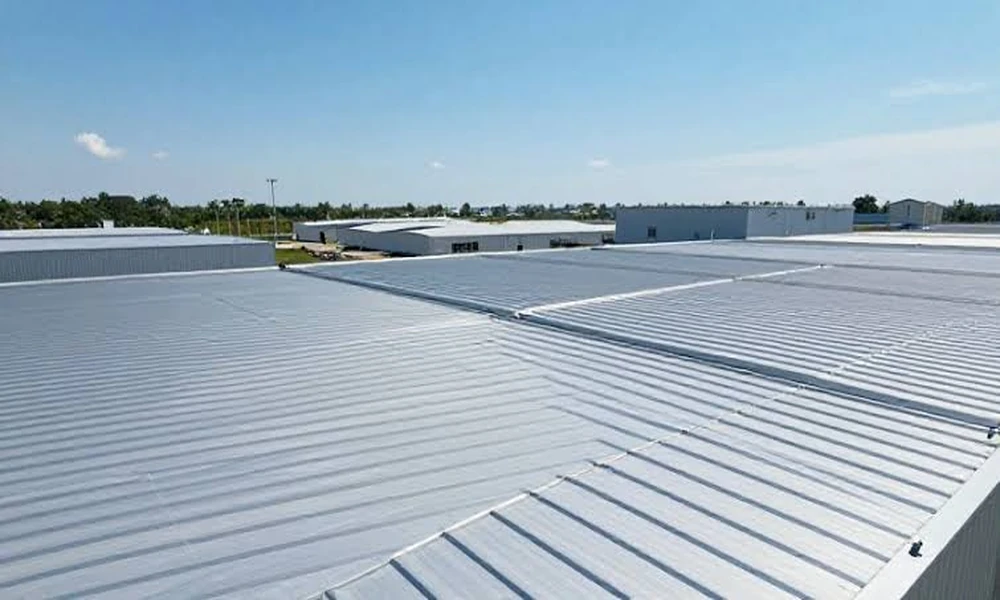

A standing seam metal roof on a house can last 50 years or more. A TPO membrane on a flat retail building is usually rated for 20 to 30. That gap has less to do with quality than with shape. A pitched roof sheds rain in seconds. A low-slope roof holds a thin film of water, sometimes for days, and every seam, drain and rooftop unit becomes a place where that water looks for a way in.
So the real difference between residential and commercial roofing comes down to how water and heat move across each surface. Homeowners mostly fight wind, hail and leaks around chimneys and vents. Building owners fight ponding, membrane shrinkage, foot traffic from HVAC techs and a sun that bakes the entire roof field evenly all day. The upkeep that keeps one roof healthy can miss the actual weak spot on the other.
For owners who want both kinds of roofs checked by people who know the difference, Stanley Built Roofing LLC starts with free roof inspections that come with a written report and photos. From there, the team builds a roof maintenance plan around what the inspection actually found, and on commercial surfaces that are aging but still sound, roof coatings can buy years before a tear-off. They also install and repair TPO, EPDM and modified bitumen systems as a GAF Certified contractor. If your last inspection was over a year ago, or a hailstorm passed through since then, schedule a roof inspection now rather than after the next leak.
Which Roof Types Fail Where?
The table below sorts the main systems by building type. The sections after it explain what drives each failure.
| Roof type | Typical building | Common failure points | Maintenance focus |
|---|---|---|---|
| Pitched residential | Single-family homes, townhomes | Flashing at chimneys and walls, cracked pipe boots, wind-lifted edges, hail bruising | Flashing checks, boot replacement, valley and gutter cleaning |
| Residential metal | Homes, shops, barns | Backed-out fasteners, dried washers, ridge seams, scratched finish | Fastener and sealant checks, finish touch-up |
| TPO | Retail, offices, warehouses | Heat-welded seams, curb and parapet flashing, punctures | Seam probing, walkway pads, drain clearing |
| EPDM | Schools, churches, older commercial | Edge shrinkage, adhesive seam failure, corner pull | Lap and edge inspection, seam retaping, ponding checks |
| Modified bitumen | Small commercial, multifamily | Blisters, granule loss, open laps, surface cracking | Blister repair, lap sealing, resurfacing |
| Built-up (BUR) | Older industrial and institutional | Splits from movement, bare gravel spots, ponding | Gravel redistribution, split repair, drainage fixes |
| Commercial metal | Warehouses, manufacturing, agriculture | Rust at cut edges, fastener leaks, thermal movement at laps | Fastener retightening, sealant renewal, spot coating |
What Wears Out First on a Pitched Home Roof?
Penetrations and flashing. On most homes, the roofing material itself is rarely where leaks start. Water gets in at the transitions: step flashing along a wall, the counterflashing on a chimney, and rubber pipe boots that crack after a few Texas summers. These parts age faster than the field of the roof, so they deserve a look every year.
Residential metal. Metal handles heat and wind well, but it moves. Panels expand in afternoon sun and contract overnight, which slowly works exposed fasteners loose and dries out their neoprene washers. Standing seam systems hide their fasteners and avoid most of this, which is a big part of why they last so long.
Storm damage you cannot see from the ground. Hail can bruise a roof without obvious holes, and dents in metal may hide scratched coatings that later rust. An inspection after any significant storm catches this while it is still a repair, not a claim fight.
Why Do Low-Slope Commercial Roofs Fail at the Seams?
Flat roofs are not truly flat. ENERGY STAR classifies a low-slope roof as one with a pitch of 2:12 or less, roughly 9.5 degrees, and notes that reflective cool roofs perform best in hot, sunny climates like the southern U.S. With so little pitch, drainage depends on design, and every lap or weld is a joint water can sit against.
TPO. This white thermoplastic membrane is the most common choice on new commercial roofs because it reflects heat and its seams are welded with hot air. A good weld is often stronger than the sheet. A rushed one becomes the weak link years later, so probing seams is the core of TPO upkeep, along with walkway pads near HVAC units where technicians step.
EPDM. Black rubber EPDM has a decades-long track record and handles temperature swings well. Its seams rely on adhesive or tape rather than welds, and older installs tend to shrink, pulling at corners, edges and penetrations. Inspections focus on those stressed perimeter areas.
Modified bitumen. This asphalt-based system is built from layered sheets, often with a granulated cap. It tolerates foot traffic better than single-ply membranes, but trapped moisture can form blisters, and granule loss leaves the asphalt exposed to UV.
Built-up roofing. BUR stacks alternating layers of bitumen and reinforcing felts, usually topped with gravel. It is tough and redundant, but building movement can split it, and wind or foot traffic can push gravel aside, leaving bare spots to bake.
How Does Commercial Metal Roofing Age?
Commercial metal roofs often outlast every membrane on this list, frequently passing 40 years. Their failures are slow and predictable. Cut edges and scratches rust first. Fasteners loosen as long panels expand and contract across a warehouse span, and sealant at end laps dries out. Retightening fasteners, renewing sealant and spot coating rust are cheap compared to the reroof they prevent.
Where Do Roof Coatings Fit Into the Plan?
When a coating makes sense. A liquid-applied coating creates a seamless layer over an existing TPO, EPDM, modified bitumen, BUR or metal roof. It works best when the roof underneath is still dry and structurally sound. It will not fix wet insulation or a deck that is failing.
Choosing the chemistry. Silicone coatings resist ponding water, which suits many flat roofs. Acrylics are lower cost and reflect sunlight well but need positive drainage. Either way, a reflective surface lowers roof temperature, which slows material breakdown in hot climates.
Keeping it working. Coatings need cleaning to keep their reflectivity and periodic recoating, typically every 10 to 15 years depending on the product and thickness. Pair that with a spring and fall inspection, plus a check after any major storm, and most commercial roofs reach or beat their rated lifespan. Homes follow a simpler rhythm, but the principle is the same: find the weak point for your specific roof shape before water finds it for you.
Does a Warehouse Roof Need Different Care Than a House?
