
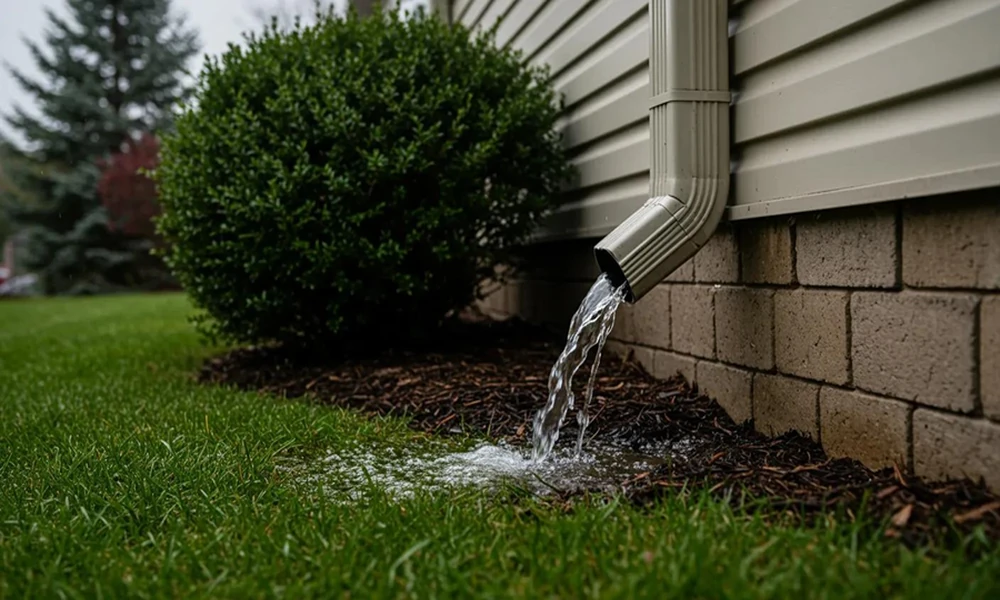

A puddle near your house after a rainstorm might seem harmless, especially when it disappears within a few hours. However, recurring water accumulation can indicate drainage problems that deserve attention.
Rainwater should move away from your home’s foundation rather than collect beside exterior walls, walkways, or basement windows. When water repeatedly settles in the same location, identifying its source can help prevent ongoing moisture problems and unnecessary repairs.
The solution isn’t always expensive landscaping or major drainage work. Sometimes, a blocked downspout, overflowing gutter, or poorly directed discharge pipe is responsible.
Understanding where the water comes from is the first step toward fixing the problem.
Understand Why Water Collects Near Your Foundation
Several factors can contribute to standing water around a residential property.
One common cause is poor surface grading. Ideally, the ground immediately surrounding a house should slope away from the foundation, allowing rainwater to move toward appropriate drainage areas.
Over time, soil can settle, creating low spots where water collects. Landscaping changes, garden beds, and paved surfaces may also interrupt natural drainage patterns.
Roof runoff is another important factor. During heavy rainfall, significant amounts of water move across the roof and enter the gutter system. If that water isn’t properly collected and directed away from the building, it may accumulate near the foundation.
The key is determining whether the problem originates from the roof drainage system, the surrounding landscape, or a combination of both.
Check Gutters and Downspouts Before Changing Your Landscaping
Before investing in drainage improvements, examine how rainwater travels from your roof to the ground.
Gutters are designed to collect roof runoff and channel it into downspouts. Leaves, twigs, roof granules, and other debris can restrict this flow. When blockages develop, water may overflow the gutter edges instead of entering the downspouts.
This overflow can concentrate moisture in areas that were never intended to receive large amounts of roof runoff.
Homeowners should look for several warning signs:
- Water spilling over gutter edges during rainfall.
- Visible debris accumulating near downspout openings.
- Water emerging from gutter joints or corners.
- Downspouts releasing water directly beside the foundation.
- Soil erosion or unusually damp ground beneath roof edges.
For homeowners researching gutter cleaning Indianapolis, an important consideration is whether the service includes checking downspout flow and identifying drainage problems rather than simply removing visible leaves.
A clean gutter is only one part of an effective drainage system. Water also needs a clear route through the downspouts and a suitable place to discharge.
Observing the system from ground level during rainfall can reveal problems that remain hidden during dry weather. Avoid climbing ladders or accessing roof edges during storms.
Examine Soil Grading and Low Spots Around the House
If the gutter system appears to function properly, the next area to investigate is the ground around your home.
Walk around the property after rainfall and note where water remains. Look for depressions in the soil, unusually damp mulch, or sections of landscaping that direct runoff toward exterior walls.
Pay particular attention to areas near basement windows, patios, driveways, and foundation corners.
Small grading problems may sometimes be corrected by improving the slope of surrounding soil. However, adding soil without understanding the existing drainage pattern can create new problems, including covering siding or blocking necessary foundation ventilation.
Hard surfaces also influence drainage. A driveway or walkway that slopes toward the house may carry runoff into areas where soil drainage alone cannot solve the issue.
Persistent or extensive pooling may require evaluation by a qualified drainage professional.
Recognize When a Drainage Problem Needs Professional Attention
Not every puddle indicates a serious structural concern. However, repeated moisture accumulation should not be ignored, particularly when it occurs close to the building.
Warning signs that deserve further investigation include:
- Water entering a basement or crawl space after rainfall.
- Persistent dampness near foundation walls.
- Soil washing away beneath downspout outlets.
- Repeated gutter overflow despite cleaning.
- Noticeable settlement around exterior walkways.
These symptoms do not automatically establish that foundation damage has occurred. They indicate that the cause of unwanted moisture should be investigated.
A gutter specialist may be appropriate for blocked outlets, leaking joints, or incorrectly positioned downspouts. A drainage contractor may be better suited to extensive grading issues, underground drainage, or persistent surface water.
Selecting the right professional depends on identifying where the drainage system is failing.
Build a Simple Rainwater Management Routine
Preventive maintenance can make drainage problems easier to detect before they become more disruptive.
Start by inspecting visible gutters and downspout outlets seasonally, particularly after leaves have fallen or severe weather has passed.
Keep ground-level drainage outlets clear of leaves, mulch, and other obstructions. Check whether discharge locations allow water to move away from the building without creating problems for neighboring properties.
After substantial rainfall, walk around the house and compare wet areas with previous observations. A few photographs taken from the same locations can help identify recurring patterns.
Homes surrounded by mature trees may require more frequent gutter inspections than properties with limited nearby vegetation.
The goal is not to follow an arbitrary cleaning schedule but to respond to the conditions around your particular home.
Conclusion
Rainwater pooling around a home can result from several interacting factors, including blocked gutters, poorly directed downspouts, uneven grading, and surface runoff.
Rather than choosing an expensive solution immediately, start by tracing where the water originates and how it travels across the property.
Inspecting roof drainage, identifying low spots, and monitoring conditions after rainfall can help homeowners make better maintenance decisions.
A drainage system works most effectively when every component supports the same goal: moving unwanted water safely away from the home.
