

Drive east from Davis toward Nevada City and you climb about 2,400 feet in roughly an hour. Flat farmland gives way to oak woodland, then to pine forest. The weather changes just as sharply. Two homes in the same region can face completely different summers and winters, and that difference shows up in how hard their heating and cooling equipment has to work.
Most homeowners never think about elevation when they buy a furnace or an air conditioner. Yet a system set up for a Sacramento heat wave can feel weak on a frosty morning in Grass Valley, and a foothill setup built around winter heating can struggle through a long August on the valley floor. Contractors such as United Climate Control, which serves both valley towns and foothill communities from Auburn, deal with this contrast every week. Knowing what changes as the ground rises helps you make sense of any repair or replacement advice you receive.
The Valley Floor Runs on Cooling
Sacramento, Davis, Woodland and Elk Grove all sit below about 100 feet. Summers here are long, dry and hot. Afternoon highs in the upper 90s are routine, and stretches above 105 degrees arrive most years. The National Weather Service treats extended heat as a real health risk, and its heat safety guidance is worth a read if someone in your household is elderly or works outdoors.
The saving grace is the Delta breeze. On many evenings, cooler marine air pushes inland through the Carquinez Strait and drops temperatures fast. That daily swing creates an opportunity. Homes that pull in cool night air with a whole house fan, or simply by opening windows after sunset, can give the air conditioner a long break.
The weak point in many valley homes is the attic. Ductwork often runs through attic space that can top 140 degrees on a summer afternoon. Leaky or poorly insulated ducts lose a surprising share of cooled air before it reaches a single vent. Sealing those ducts often does more for comfort than a bigger AC unit would.
Winters on the valley floor are mild but damp. Tule fog can settle in for days, bringing a raw chill that feels colder than the thermometer suggests. Heat pumps handle these conditions well, because temperatures rarely fall far below freezing.
The Suburban Middle Ground
Roseville, Rocklin, Folsom and Lincoln sit somewhere between 150 and 500 feet. They share the valley’s hot summers, but the Delta breeze weakens the farther east you go. Evenings cool off more slowly.
Housing stock here also shapes the comfort picture. Many neighborhoods are filled with newer two story homes, and those homes often have one system serving both floors. Heat rises, so the upstairs bedrooms run warm all summer while the downstairs feels fine. Common fixes include zoning with motorized dampers, a second system for the upper floor, or a ductless unit for a bonus room over the garage. Each option has trade offs in cost and complexity, but all of them start with measuring how much heat each part of the house actually gains.
Foothill Homes Need Real Winter Capacity
Auburn sits around 1,250 feet. Grass Valley and Nevada City are closer to 2,400 and 2,500 feet. Up here, the heating side of the system matters far more.
Frost is common on winter nights, and snow falls in the higher towns most years. Summers are still warm, especially in Auburn, but nights cool down without any help from the Delta. That makes heating the primary job in many foothill homes.
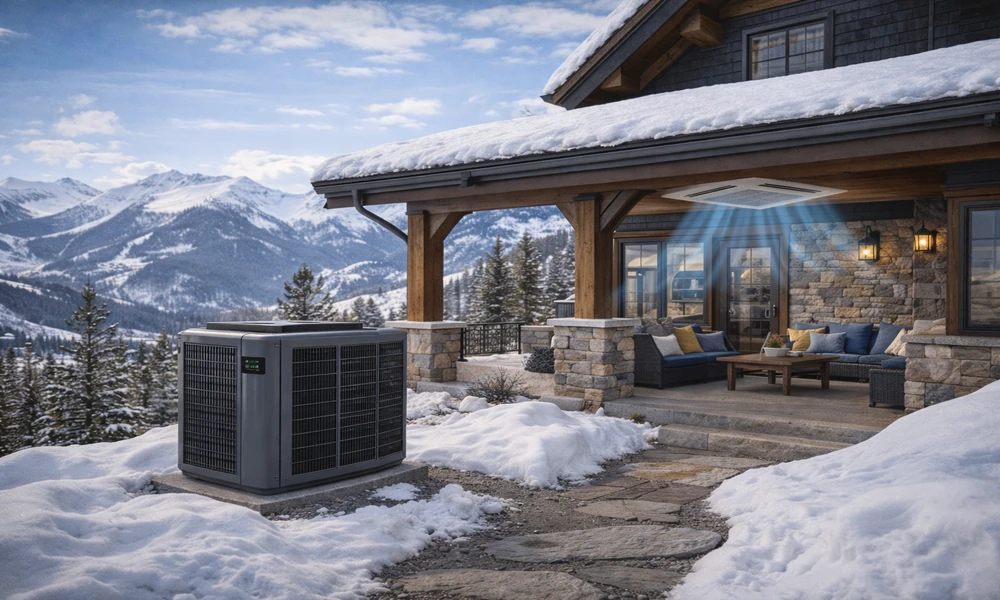
Fuel is another factor. Natural gas lines do not reach every rural property, so many foothill homes rely on propane or electric heat. Propane prices swing, which has pushed more homeowners toward heat pumps. Modern cold climate heat pumps keep working efficiently well below freezing, which makes them a realistic option even at 2,500 feet. Some households pair one with their existing propane furnace as backup for the coldest nights.
Power reliability adds one more layer. Foothill neighborhoods in high fire risk areas can face planned power shutoffs during windy, dry weather. Homes that depend entirely on electric heat should think about backup plans, whether that means a properly installed generator connection or a secondary heat source that does not need grid power.
Here is how the three zones compare at a glance.
| Zone | Example towns | Biggest stress | What tends to help most |
|---|---|---|---|
| Valley floor | Sacramento, Davis, Woodland | Long summer heat, hot attics | Duct sealing, night cooling, efficient AC or heat pump |
| Suburban middle | Roseville, Folsom, Lincoln | Uneven temperatures in two story homes | Zoning, second system, ductless rooms |
| Foothills | Auburn, Grass Valley, Nevada City | Cold nights, fuel costs, outages | Cold climate heat pumps, dual fuel, backup planning |
Smoke Season Reaches Every Elevation
Wildfire smoke does not respect zone boundaries. During bad fire seasons, the valley and the foothills can sit under the same haze for weeks. Your HVAC system becomes a filtration tool during those periods.
The EPA’s guidance on air cleaners and HVAC filters suggests using a filter rated MERV 13, or the highest rating your system can handle. That last part is important. Denser filters restrict airflow, and an older blower may not cope well with the extra resistance. A technician can check static pressure to confirm whether your system can run a higher rated filter safely. During smoke events, running the fan to recirculate indoor air and keeping outdoor air intake closed both help keep particle levels down inside.
Why Load Calculations Matter More Than Square Footage
Many systems in this region were sized with a simple rule of thumb based on floor area. That approach ignores elevation, sun exposure, insulation, window area and local design temperatures. Auburn and Sacramento have different winter design temperatures, and a load calculation done properly accounts for that difference. An oversized system short cycles, wears out sooner and leaves rooms clammy. An undersized one runs constantly on the hottest and coldest days.
Before replacing equipment, it is reasonable to ask whether a room by room load calculation will be done, how the ductwork will be evaluated, and whether the recommended system suits your specific elevation and fuel situation. Good answers to those questions usually point to a contractor who understands that a home in Davis and a home in Nevada City are not solving the same problem.
Elevation will never be the only factor in choosing a system, but in this part of California it quietly shapes almost everything else. Paying attention to where your home sits on that climb from valley to forest leads to better comfort, lower bills and equipment that lasts longer.
Does Elevation Change How a Northern California Home Should Be Heated and Cooled?
